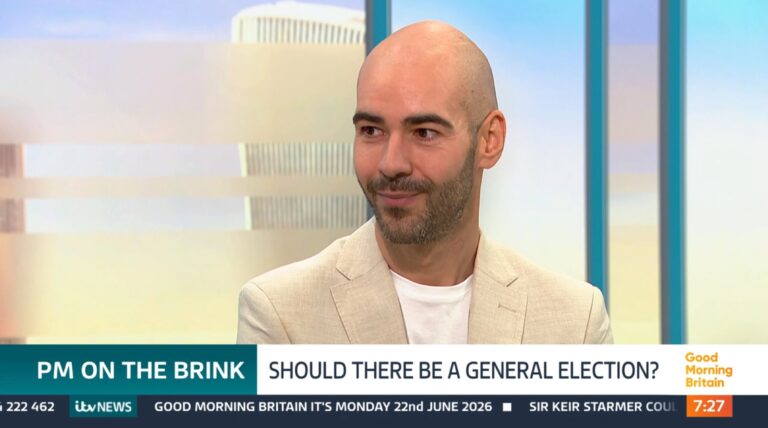



Every political era seems to produce a minister who becomes bigger than their Department. A figure who dominates media rounds, drives reform at speed, and excites journalists in equal measure. For the Conservatives in the 2010s, that figure was Michael Gove. For Labour today, it has been Wes Streeting.
Now, with Streeting’s resignation reigniting speculation about Labour’s future leadership, the parallels between the two men look even harder to ignore.
Both built reputations not as safe custodians of government, but as insurgent reformers willing to take on institutions from within. Both understood that political capital is earned through conflict as much as consensus, cultivating the image of ministers in a hurry: intellectually confident, media fluent and dissatisfied with the pace of government.
Gove arrived at the Department for Education in 2010 determined to remake the system rather than manage it. He relished confrontation with unions, challenged orthodoxies around standards and accountability, and drove reforms with an intensity that often made colleagues uncomfortable. Whether one agreed with him or not, few doubted he was serious about changing the machinery of the state.
Streeting approached the Department of Health and Social Care in much the same way. From the outset, he positioned himself not as a defender of NHS orthodoxy but as a reformer prepared to ask difficult questions around productivity, workforce culture and the role of the private sector. Like Gove, he understood that incrementalism rarely creates political identity.
Both men also mastered political communication. Gove’s years in journalism made him one of the most effective media operators of his generation, capable of turning reform into a moral argument. Streeting shares that instinctive understanding of political narrative, embracing controversy rather than avoiding it and appearing more comfortable prosecuting arguments in public than negotiating them quietly behind closed doors.
That combination of reforming zeal, media agility and relentless ambition inevitably fuels leadership speculation. Gove carried leadership expectations for much of his ministerial career, particularly after Brexit transformed the Conservative Party. Streeting, meanwhile, has long been viewed by many Labour MPs as part of the party’s next generation, even before the current instability surrounding Keir Starmer.
Streeting’s challenge is not simply ideological, but personal and political. Like Gove before him, he has developed a reputation inside his own party as a figure of considerable talent but uneven trust. Admirers see him as one of Labour’s clearest communicators and most electorally attuned politicians. Critics on the soft left view him as overly confrontational and politically ambitious in a way that makes colleagues cautious. That tension is already shaping leadership calculations, with speculation that figures such as Angela Rayner or Ed Miliband could emerge as “blocking candidates” should Andy Burnham fail to return to Parliament through the Makerfield by-election. For some in Labour, stopping Streeting is as important as choosing a successor.
Yet the similarities may extend to their limitations as well.
For all Gove’s influence, he never fully convinced colleagues that he should lead the country. His reputation for tactical manoeuvring, sharpened by the Boris Johnson betrayal in 2016, ultimately made too many colleagues wary. He became indispensable to government, but never fully trusted as the face of it.
Streeting may now face a similar problem. Resigning from government may strengthen his image as an independent political figure, but leadership contests are rarely won on profile alone. They are won on timing, coalition-building and trust within the Party. In stepping away so publicly, he risks looking less like Labour’s future and more like its most talented dissenter.
That may prove the final parallel between the two men. Both are reformers built to shape governments rather than lead them. Michael Gove never made it to Number 10, and after this week, it increasingly feels unlikely that Wes Streeting ever will either.