

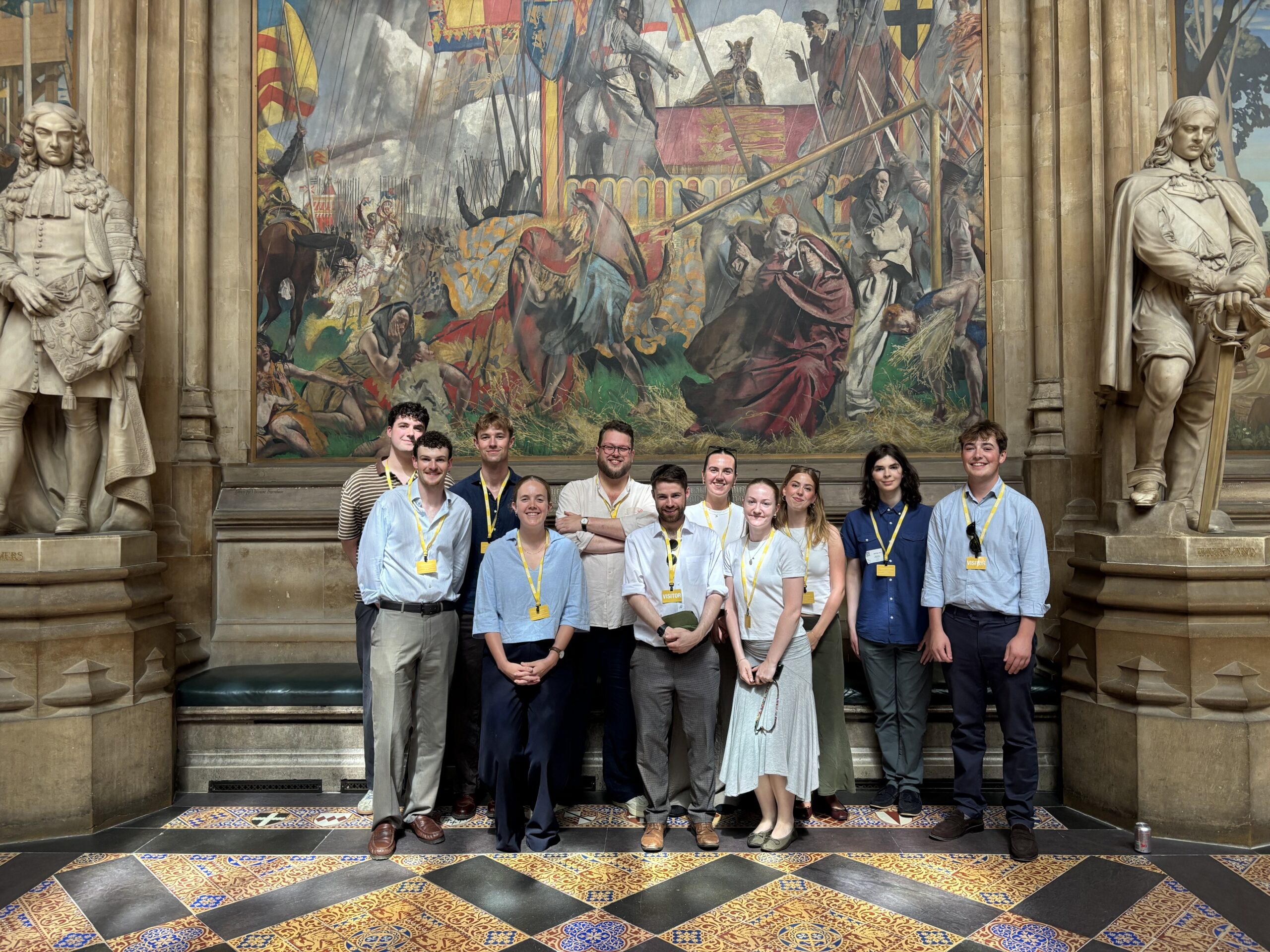
Guest Blog written by PLMR intern Tarryn Edwards
In three months of working in public affairs, I have learnt that politics rarely waits for the next lecture.
For the past two years, I have studied Politics and International Relations at the University of Bath. Before starting my placement year, I was keen to gain experience of politics beyond the classroom, and spending part of that year as an intern in the Public Affairs team at PLMR has given me the opportunity to see how politics and policy interact in practice.
One of the first things I learnt was that public affairs requires more than just an understanding of political institutions and ideas. It also means understanding how organisations navigate politics, engage with policymakers and respond to change. Over three months, I was involved in a wide range of work, from stakeholder mapping, industry research and political monitoring to writing to MPs and ministers, preparing briefings and supporting press activity.
I also worked with a wide variety of client accounts including organisations whose role in shaping policy I had previously been unaware of. That gave me a much broader sense of just how many areas politics touches, and how many organisations and individuals are passionate about influencing particular debates. Politics is not just about political parties, elections and government. Around them sits a huge network of organisations trying to understand policy, shape it and make their voices heard.
Moving from reading about Westminster in Bath to working in Westminster itself also brought opportunities I would never have had in a lecture hall. I supported events in Parliament, including a roundtable on women’s health, which gave me first-hand insight into the work involved in bringing policymakers and stakeholders together around an issue. I also had the chance to experience Westminster in other ways, including a lunch at the House of Lords. Beyond Parliament, supporting media appearances and spending time behind the scenes at a TV studio gave me an insight into another side of public affairs.
Perhaps nothing demonstrated the difference between studying politics and working in the sector more clearly than the pace of political change. In just three months, I saw one government come to an end and another take shape following Starmer’s resignation.
Watching those developments unfold in real time gave me a very different perspective from analysing political change retrospectively. It showed me how important it is for public affairs consultants to understand what is changing, what it means for different organisations and how they should respond at pace.
My degree has given me a strong understanding of political institutions, ideas and processes, but my internship showed me the range of organisations, interests and people affected by political decisions and how they, in turn, respond and seek to shape them. Understanding an issue means knowing the policy behind it, who is impacted, who has influence, how different stakeholders’ priorities and perspectives shape their response, and how those dynamics can change when the political landscape shifts.
I’m returning to my final year with a broader understanding of politics than I had before my internship, and a much clearer sense of the people, interests and decisions that shape the issues which eventually make their way into the lecture hall.