
In today’s fragmented digital landscape, audiences are no longer confined to a single platform, channel or touchpoint. They move seamlessly between search engines, social media, news outlets, websites and messaging platforms – often within minutes. For brands, this presents both a challenge and an opportunity.
The most effective marketing strategies are no longer siloed. They are multi-channel, integrated and (crucially) holistic. But while integration is key, success lies in balancing consistency with nuance: delivering a unified message that is carefully adapted to suit each platform, audience and format.
The shift from silos to systems
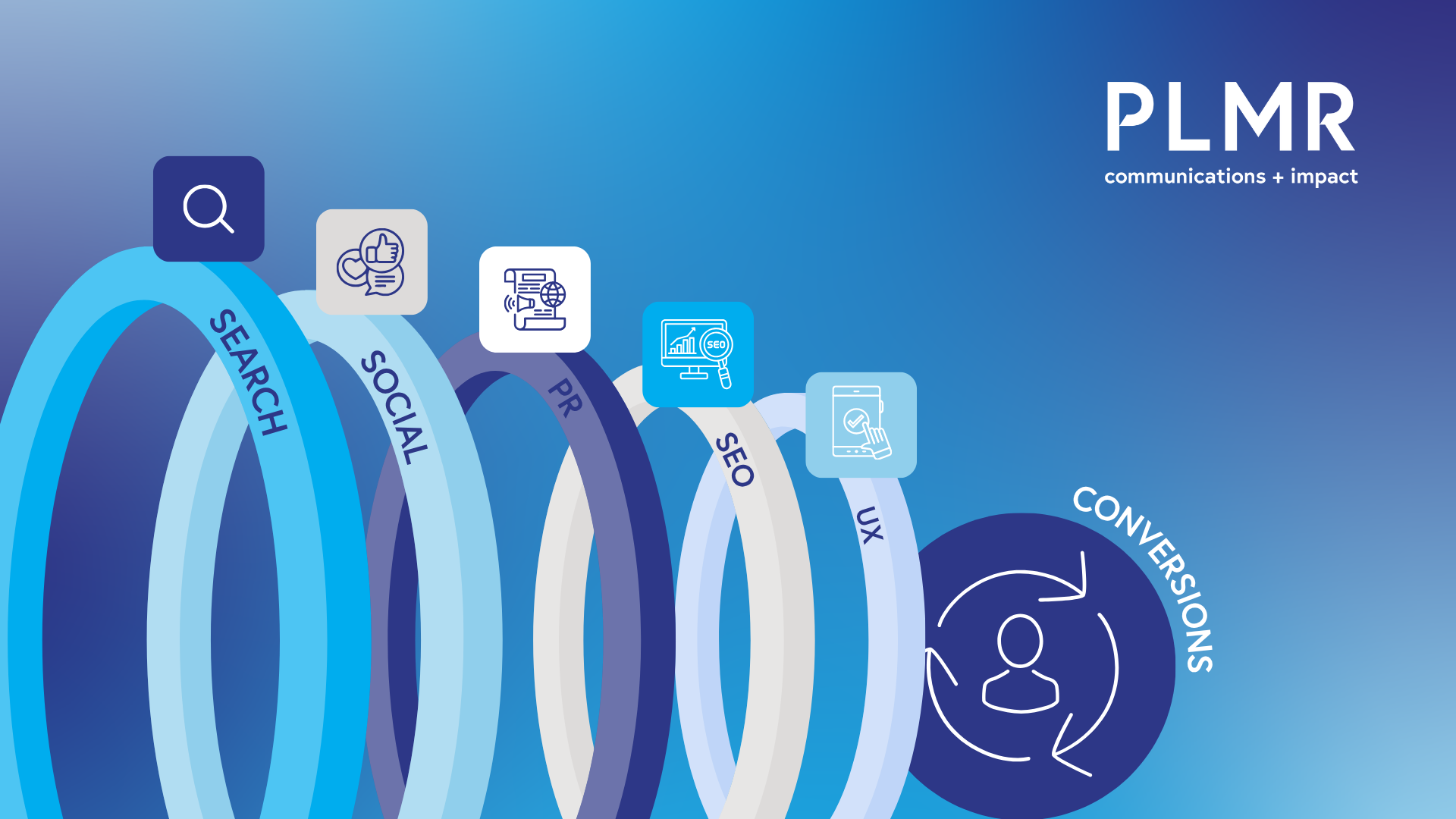
Historically, marketing disciplines such as PR, SEO, paid media and web design operated independently. Today, that model is outdated. Search informs social. Social amplifies PR. PR builds authority that strengthens SEO. And UX determines whether any of that activity converts.
A multi-channel approach recognises that no single channel operates in isolation. Instead, it treats marketing as an interconnected system, where each element supports and enhances the others.
Organic and paid search: capturing intent
Search remains one of the most powerful indicators of user intent. But relying solely on organic or paid search limits potential. Organic search (SEO) builds long-term visibility and credibility. It ensures your brand appears when users are actively seeking information. Paid search (PPC) provides immediacy, precision targeting and control over messaging.
Together, they allow brands to dominate the search engine results page – capturing both high-intent users and those earlier in the decision-making journey. However, the messaging must adapt. Organic content often leans into informative, value-led content, while paid search requires concise, action-driven copy designed to convert quickly.
Organic and paid social: building awareness and driving action
Social media plays a dual role: discovery and engagement. Organic social builds brand personality, trust and community. It’s where storytelling thrives. Paid social enables targeted reach, allowing brands to speak directly to specific demographics, behaviours and interests.
The key is alignment. A message that works organically may need to be sharper, more direct or more visually striking in a paid format. Similarly, creative that performs well in paid campaigns can inform organic content strategies. Different platforms also demand different approaches. What resonates on LinkedIn may not translate to Instagram or TikTok. Tone, format and even subject matter should flex accordingly.
PR: credibility in a noisy world
In an era of misinformation and content overload, third-party validation is more valuable than ever. PR builds authority, trust and visibility in a way that owned and paid channels cannot replicate. Coverage in respected publications not only enhances brand perception but also feeds directly into other channels:
- It strengthens SEO through high-quality backlinks.
- It provides content for social amplification.
- It enhances credibility in paid campaigns and on landing pages.
PR should not sit apart from digital marketing – it should be embedded within it.
Web design and UX: where everything converges
All channels ultimately lead somewhere, and that “somewhere” is usually your website. A well-designed, user-centric website is essential to converting interest into action. No matter how effective your PR, search or social campaigns are, poor UX will undermine results. Key considerations include:
- Clarity of messaging aligned with campaign objectives
- Seamless navigation tailored to different audience journeys
- Mobile optimisation across all devices
- Fast load times and accessibility
Your website must reflect the same strategic thinking as your external channels, while also catering to diverse user needs and expectations.
One strategy, multiple audiences
A common misconception is that a holistic strategy means uniform messaging across all channels. In reality, the opposite is true. A strong multi-channel strategy starts with a clear, central narrative but adapts its delivery based on:
- Audience segments (e.g. stakeholders, consumers, policymakers)
- Platform behaviours (search vs social vs editorial environments)
- Content formats (short-form, long-form, visual, video)
For example, a policy-focused message might be detailed and evidence-led in a thought leadership article, but distilled into key takeaways for social media or framed as a compelling headline for paid campaigns. Consistency builds recognition, and adaptation drives engagement.
The role of integrated strategy
At the heart of effective multi-channel marketing is strategy. Without a clear strategic framework, activity becomes fragmented – channels compete rather than complement each other, messaging becomes inconsistent, and performance is harder to measure.
An integrated strategy ensures:
- Clear objectives across all channels
- Defined roles for each discipline
- Consistent messaging with tailored execution
- Data-driven optimisation across the entire ecosystem
Building on a strong foundation will have deeper impact, with each channel reinforcing the others.
Multi-channel marketing in practice: sector examples
While the principles of multi-channel marketing remain consistent, how they are applied varies significantly by sector. At PLMR, understanding these nuances is critical to delivering campaigns that resonate with the right audiences and drive meaningful outcomes.
Healthcare
In healthcare, trust and clarity are paramount. A multi-channel campaign might combine:
- PR to secure coverage in national and trade health media, building credibility around a new treatment or service
- SEO-led content answering patient queries and improving visibility for key conditions or services
- Paid search targeting high-intent users seeking immediate support or information
- Social media to humanise messaging – sharing patient stories or clinician insights
- Website UX focused on accessibility, clear pathways to care, and reassurance
Messaging must balance clinical accuracy with empathy, adapting for both professional and patient audiences.
Education
Education marketing often involves multiple decision-makers – students, parents, and policymakers. An integrated approach could include:
- Organic social (particularly TikTok and Instagram) to showcase student life and authentic experiences
- Paid social campaigns targeted at prospective students by geography, interests or stage in the application cycle
- PR activity highlighting institutional achievements, research breakthroughs or Ofsted outcomes
- SEO content addressing course queries, career outcomes and application guidance
- Website optimisation ensuring a seamless journey from discovery to application
Each audience requires tailored messaging – from aspirational storytelling to practical, information-led content.
Public Affairs
For public affairs campaigns, influence and reputation are key. A multi-channel strategy may involve:
- Targeted PR in political and policy media to shape narratives
- LinkedIn organic and paid campaigns to reach stakeholders, decision-makers and industry leaders
- Search campaigns capturing interest around policy developments or consultations
- Thought leadership content hosted on a well-structured website or hub
- Digital amplification of reports, consultations or campaigns
Messaging must be precise, evidence-based and tailored to different stakeholder groups, from policymakers to the public.
Built Environment
In the built environment sector, campaigns often need to engage communities, investors and policymakers simultaneously. A holistic approach could include:
- Community-focused social campaigns explaining developments in accessible, visual formats
- PR coverage in regional and trade media to build awareness and support
- Paid social targeting local audiences affected by or interested in developments
- SEO and content around planning, sustainability and regeneration
- Interactive website elements such as virtual tours or consultation hubs
Here, clarity and transparency are critical, with messaging adapted for both technical and non-technical audiences.
Energy and Sustainability
Communicating in this space requires balancing technical complexity with public understanding. A strong multi-channel campaign might feature:
- PR-led thought leadership on policy, innovation or sustainability goals
- Search strategies capturing interest in renewable solutions or regulatory changes
- LinkedIn campaigns targeting industry stakeholders and partners
- Social content simplifying complex topics for broader audiences
- Website UX focused on education, impact and credibility
Messaging must be both authoritative and accessible, reflecting the growing public and political focus on sustainability.
Final thoughts
Multi-channel marketing is no longer a “nice to have” – it’s essential for brands that want to remain visible, relevant and competitive. Success comes from understanding how platforms interact, how audiences behave within them, and how to deliver the right message in the right way at the right time.
Integration is what brings everything back together.