
As we head towards the May local elections a new poll reveals signs that Reform UK’s rapid rise is stalling, with the Party seeing its vote share decline in the region compared to three months ago.
The new MRP research, conducted by Ipswich based communications agency PLMR Genesis in partnership with Electoral Calculus, provides a seat by seat breakdown of voting intentions if a General Election was held tomorrow.
Whilst Reform were polling at 34% in January in the East of England, this fell to 32% in April.
In Essex, Reform is still expected to win 15 seats out of 18, with the with the Liberal Democrats winning Chelmsford, the Conservatives winning Epping Forest, and Labour winning Colchester.
In Suffolk, Reform would win 7 out of the 8 seats, with the Greens holding onto Waveney Valley.
In Norfolk, Reform is on track to win 7 out of the 10 constituency seats, with the Liberal Democrats taking North Norfolk, and the Greens winning Norwich South and Waveney Valley.
In Cambridgeshire, Reform would win 4 out of the 8 seats, with the Greens taking Cambridge, the Liberal Democrats winning in South Cambridgeshire and St Neots and Mid Cambridgeshire, and the Conservatives winning Ely and East Cambridgeshire.
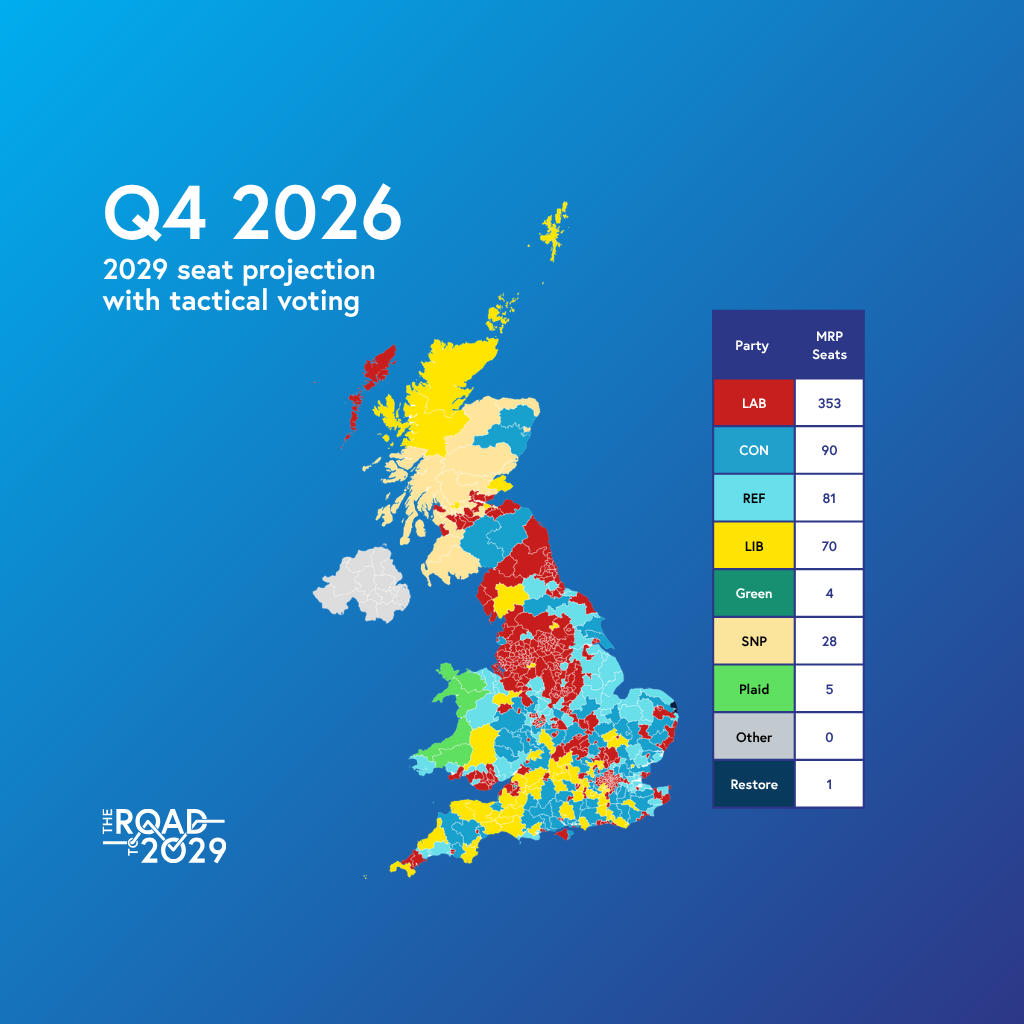
At a national level, the polling shows Reform UK remains the largest party on 24% of the vote, but support has fallen back from its recent peak, indicating the party may be hitting its ceiling. The Conservatives have recovered to 21%, narrowing the gap, while Labour sits on 17%.
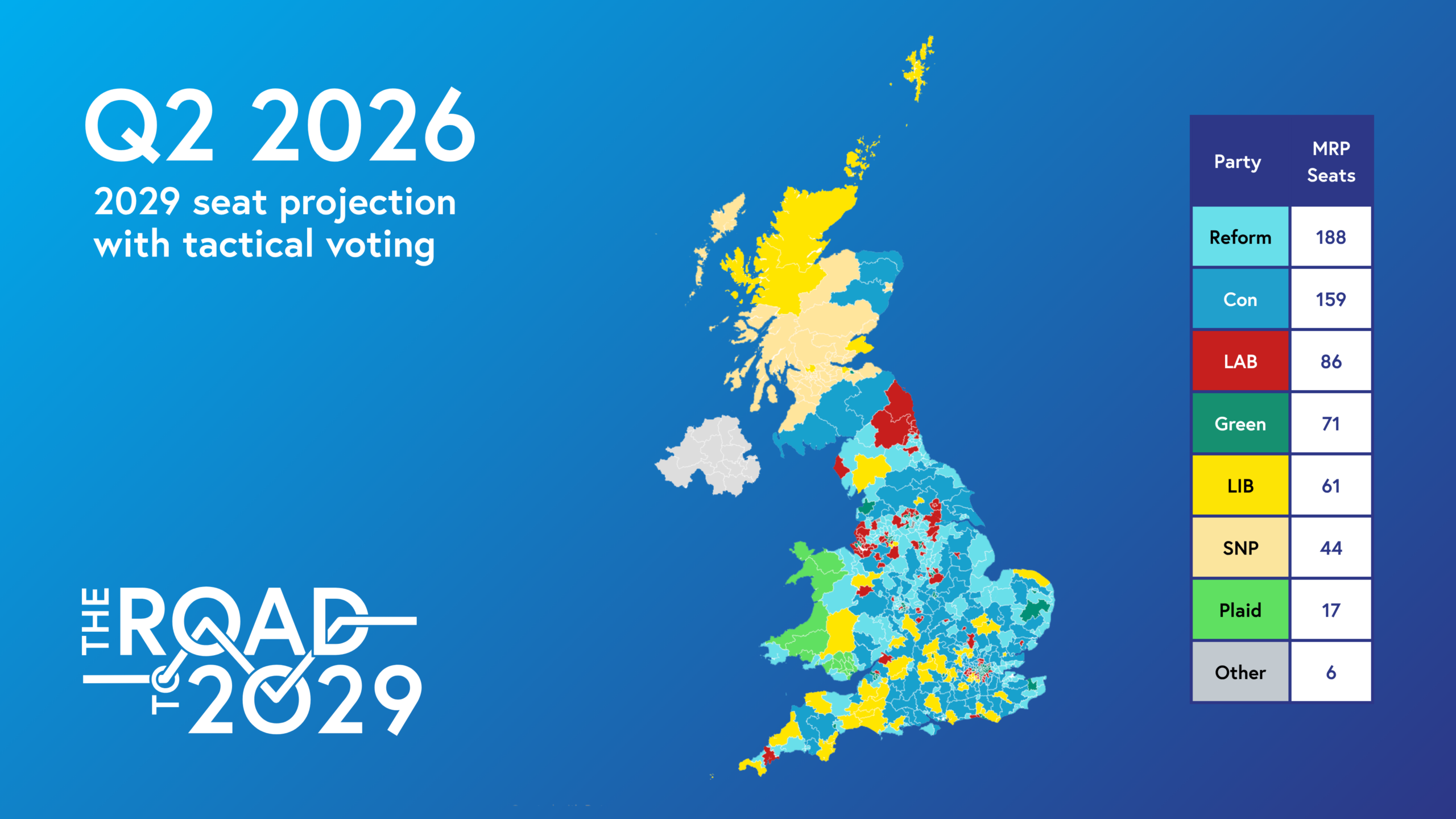
If an election were held tomorrow, despite leading the vote, Reform would still be short of a majority with a projected win of 188 seats – down from 335 in January. This is followed by the Conservatives on 159 seats and Labour on just 86 seats. This would indicate the UK is heading towards a hung parliament, led by a Reform/Conservative coalition.
On the left, the vote remains tightly split, with Labour and the Greens competing closely for support. The Greens are projected to win 71 seats, highlighting the continued fragmentation of the progressive vote and its impact on Labour’s ability to convert support into seats.
Commenting on the latest findings, Tim Miller, Managing Director of PLMR Genesis, the East of England team for PLMR, said: “We are seeing another political shift as Reform UK’s rapid climb is starting to level off. With a higher public profile comes a high level of scrutiny and it’s clear voters are looking beyond the headlines. They now want a credible roadmap for how the party actually intends to deliver on its promises.
“This latest poll also highlights just how fractured our politics has become. Long gone are the days of the two horse race. With support drifting between parties on both the left and the right, the upcoming elections are very much up for grabs. No single party yet is on track to form a majority government at the next election. Each Party still needs to convince a more sceptical public that they have the practical solutions to make genuine improvements to their day to day lives.”
The poll also identified how engaged voters are in the upcoming local elections. Only a third (33%) of voters in the East of England can correctly identify which party runs their local council, while 35% say they do not know.
The findings suggest that political disengagement at a local level is helping to fuel support for new parties, while weakening the traditional advantages enjoyed by incumbents and established parties.
Tim Miller added: “The fact that only a third of people can name the party running their local council is a wake-up call for the level of disillusionment we are seeing in our politics. Many voters feel increasingly disconnected from the people making decisions in their own backyards, which is why we’re seeing third parties able to position themselves as the alternative.
“But all is not lost for the current Labour government. To win back trust they must focus on showing, not just telling, people about the positive progress being made and how local leadership is working to make their communities better.”
Martin Baxter, founder of Electoral Calculus, said: “Reform remains the largest party, but is noticeably less popular than at its peak last year, with its national support sliding back to where it was at the start of 2025.
“Nigel Farage now faces the challenge of holding on to some voters drifting back to the Conservatives on his left and others possibly shifting towards Restore Britain as a new right-wing alternative. If fragmentation on the right increases, Reform could face similar challenges to those Labour has experienced due to the vote splitting on the left.”